
Matt, Kelsey, and their two kids
Matt and Kelsey moved to Chicago over a decade ago looking for a community that shared their values: open, inclusive, and genuinely caring. They found it, built a life here, and raised two kids. Then dialysis entered the picture and changed everything.
Kelsey has been by Matt's side through all of it. Her perspective on what this has meant for their family is one of the most honest parts of Matt's story, and one of the most important reasons they are asking for help now.
First warning signs
Matt started getting frequent headaches. A doctor visit revealed high blood pressure, which is unusual for a child. His father had kidney disease, and the connection was clear: Matt was at elevated risk for Polycystic Kidney Disease (PKD).
Monitored but well
For decades, Matt was watched closely but remained largely healthy. He built a life in Chicago: a career, a marriage to Kelsey, and two children. PKD was a background concern, not a daily reality.
The turning point
Matt started feeling constantly drained. He was getting sick more often, running low on energy he could not explain. He saw his nephrologist, who delivered the news: his kidneys had passed the point of failure. Dialysis was the only path forward.
Living on dialysis
Matt does dialysis four to five days a week, plus setup and breakdown. It consumes 25 to 30 hours of his week, on top of a full-time job, a marriage, and two kids who need their dad. The only real solution is a kidney transplant.
It is not just 25 hours a week that you do not see him. He is also too tired to take out the trash, or he has fallen asleep on the couch again. Every little thing in your life changes dramatically.
Kelsey Dicker, Matt's wifeThe bar that was set for him.
Matt watched his own father manage kidney disease while working a demanding, high-stress job and raising a family. It was not easy. There were times Matt wished his dad had more energy, could do more of what other dads did. But his father never used the illness as an excuse. He showed up.
That left a mark on Matt. He holds himself to a standard he admits is probably too high, expecting himself not to drop the ball at anything. And then dialysis takes 25 to 30 hours a week, and those hours have to come from somewhere.
Matt watched his dad receive a kidney from his mom. He watched a man who had been pretty sick become genuinely healthy again, able to travel, exercise, and be present. "It is something to dream about someday," Matt says.
Being present is the hardest part.
Matt does not always feel sick in the way most people imagine. More often, he feels low on energy. He cannot show up the way he wants to for the people who need him, because there is simply not enough left in the tank.
There are hard restrictions on what he can eat, and he can only drink 32 ounces of fluid a day. That is a difficult thing in a humid Chicago summer or when everyone around you has a hot cup of coffee on a cold morning.
He has had to make hard choices about how he spends his hours. Maintaining friendships the way he would like is genuinely difficult when dialysis, work, and family leave so little room. The people in his life have been understanding and kind about it, which he is deeply grateful for. But it weighs on him. He is someone who wants to show up for people, and right now there are limits to how much he can.
He tries to focus on what matters most and trusts that the people who know him understand why.

Reading day at school. The moments he fights for.
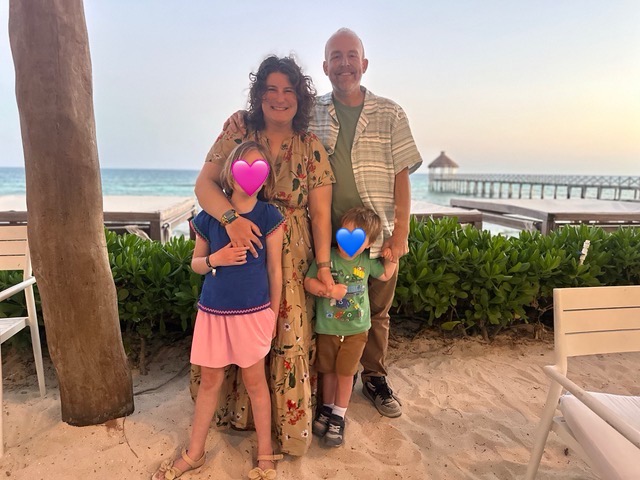
A family trip. The kind of thing a transplant makes possible.
He watched his dad get one. He knows what it looks like.
Matt's father received a kidney from his mom. Matt watched a man who had been pretty sick become genuinely healthy again: able to travel, exercise, be fully present. "It is something to dream about someday," Matt says.
A transplant would fundamentally change his life in every way. More energy. More time. More of himself to give to his family, his work, and the people he cares about.